
CERES, the app that applies artificial intelligence to cereal crop cultivation
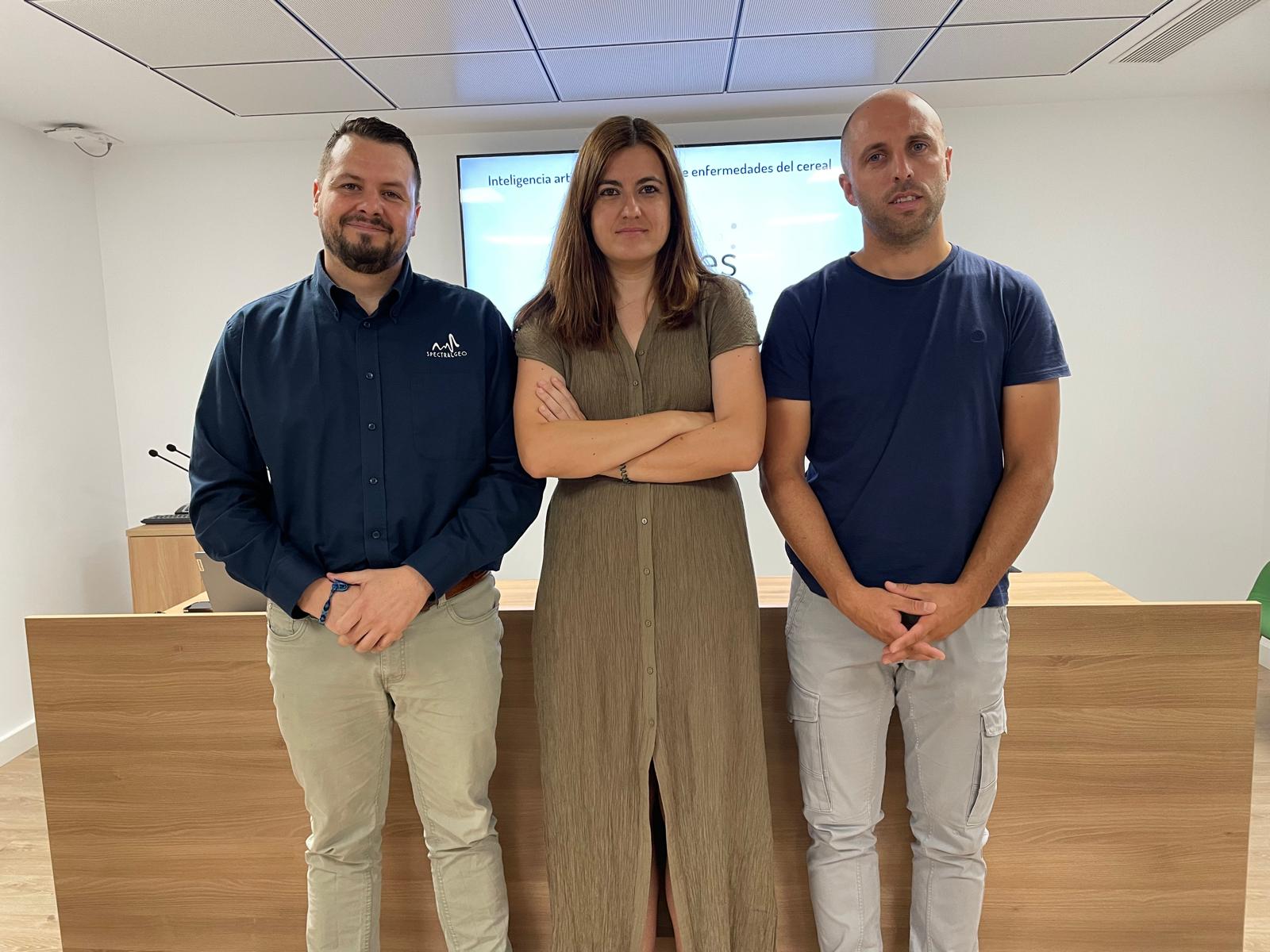
The CERES AI application, developed by Spectral Geo, Servicios Agrarios Riojanos, and AERTIC, enables the prediction of cereal diseases 12 days in advance, allowing for more targeted and effective treatment.
After months of collecting and analyzing data in the field, the project's findings show an accuracy rate of over 80% in predicting diseases in wheat and barley.
The app predicts diseases in the crop 12 days in advance, which allows for more targeted and effective treatment of the specific fields that need it, saving time and money and increasing farm profitability.
Eduardo Pérez, president of Servicios Agrarios Riojanos (SAR) and ARAG-ASAJA, highlighted the importance of tools like CERES for grain farmers, a sector that has been facing serious difficulties for several growing seasons. “We launched the CERES project last fall with the goal of contributing to the improving profitability for grain farmers because, although this crop is known for its high yields and quality, the same cannot be said in terms of profitability due to external factors such as imports from third countries, unfair competition, and the disastrous proposal to reform the CAP", Pérez said.
The work of the SAR technicians and the staff of the Department of Agriculture and Livestock of the Government of La Rioja—who have extensive knowledge of the crop—has been key to the project’s development when it comes to compiling information on more than 300 hectares in the La Rioja Alta region.
The CERES project has continued the collaboration between the agricultural sector and AERTIC, launched in 2022 and through which the following have been carried out to date 5 projects in total, which is a clear example of the success of this partnership.
Laura Urbieta, secretary general of AERTIC, stated that “one of CERES’s main achievements is that it has not been conceived as an isolated solution, but rather as the first step toward a tool that can be replicated in other crops and regions.” In fact, as she pointed out, digitization should be a tool that supports the day-to-day operations of the agricultural sector in order to make it a more attractive activity, create jobs, and help keep people in rural areas.
FIELD DATA IN THE CLOUD
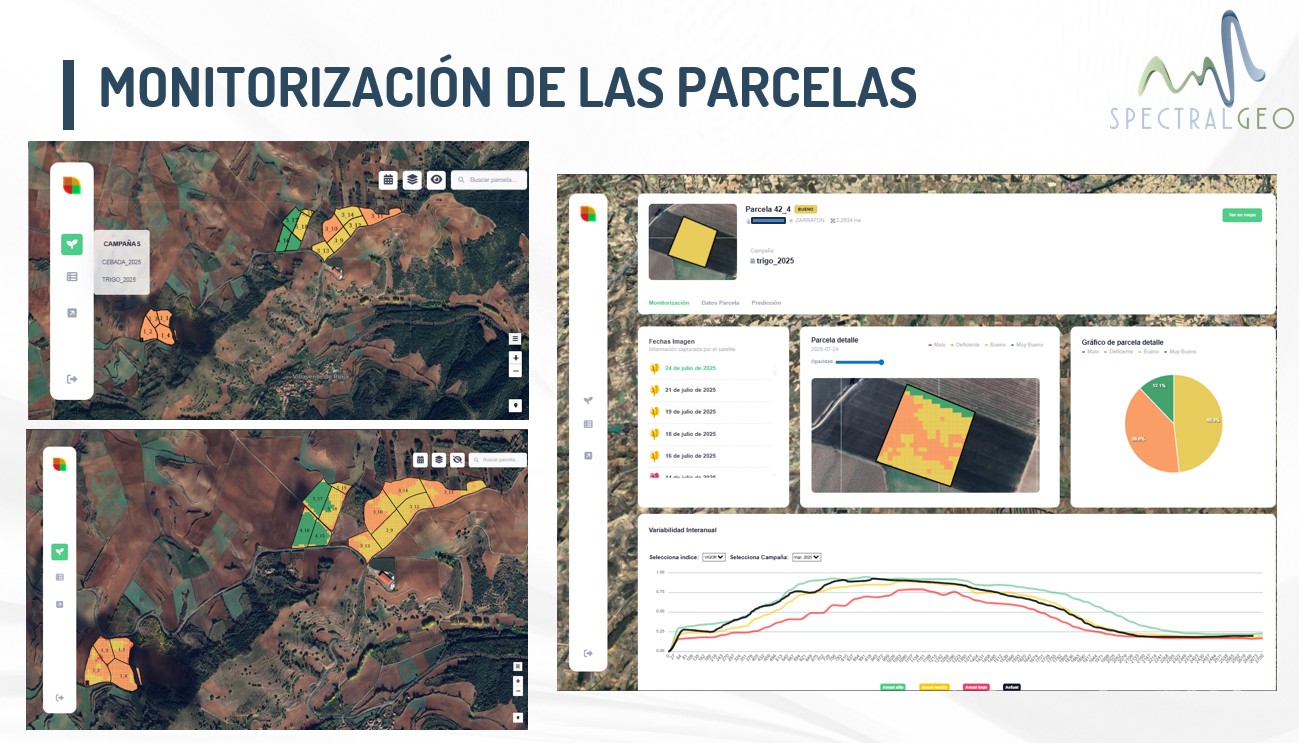
For its part, Carlos Tarragona, The director of Spectral Geo explained that the CERES app allows users to view images with just four clicks the incidence rate of each disease on the monitored plots and share that information in the cloud to gradually build the predictive model.
“We have surveyed fields used for growing barley and wheat, and the accuracy of our disease incidence predictions has been very high,” said Tarargona. “For example, for barley diseases such as helminthosporiosis, the accuracy is 82%; for rincosporiosis, it has reached as high as 100%.” In the case of wheat, prediction accuracy has exceeded 88% for diseases such as powdery mildew, septoria, and rust. “To get here, in addition to the data collected by SAR technicians, we have We downloaded satellite, weather, and topographic images, and compared them with the actual field data "From planting to harvest," Carlos Tarragona noted.
The fact is that CERES is not just a diagnostic tool; it also allows users to create a model up to 12 days in advance—a crucial period of nearly two weeks for treating fields that are a priority due to their high incidence of disease.
The a project that is 75% complete ...and which will conclude next October, will also analyze the productivity of the plots in relation to the prevalence of the disease.
CERES is a pilot project that is part of the annual call for proposals from the Department of Local Policy, Infrastructure, and the Fight Against Depopulation of the Government of La Rioja, developed by SAR and Spectral Geo, coordinated by AERTIC and with the collaboration of the municipal governments of Tricio, Casalarreina, and Selectis.